Good resources for writing your letters

This is a list of some resources I suggest for facts and statistics to support the arguments in your first opinion letters, on nuclear energy or nuclear waste issues.

U.S. government websites:

Nuclear Regulatory Commission (oversees licensing and safety regulations for reactors)

E.P.A. (sets standards for radiation exposure limits, including standards applied for nuclear waste sites)

D.O.E. (the “science” part of the government’s involvement in nuclear energy)

Pro-nuclear industry groups (often these websites have excellent statistics to use):

American Nuclear Society

World Nuclear Association

Anti-nuclear groups:

Union of Concerned Scientists (this organization is not strongly anti-nuclear, but is mostly concerned with advocating for safety and good approaches to waste management)

NEIS (Illinois anti-nuclear-power group with a long history and an active Chicago presence)

Federation of American Scientists (a long-standing anti-nuclear-weapons group with many helpful publications, although only a few deal directly with nuclear energy or waste)

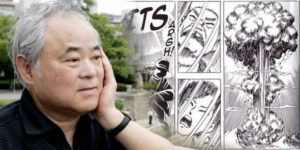


“I Saw It!” Keiji Nakazawa’s Story

Here’s a couple links about Keiji Nakazawa, a personal survivor of the bombing of Hiroshima. Researching him is something I do and if you’d like more information just email my canvas page.

Here’s the first comic he drew for the events, appearing in the newspaper. Warning for graphic drawn depictions of the atomic affects, including body horror, eye horror, burning, and death: LINK

Here’s a really interesting interview with him about that day. Warning for graphic descriptions and a couple drawings of the atomic affects: LINK

Here’s a link to the first book in his full series, Barefoot Gen, highlighting his whole life, not just the events surrounding the bombing. But it’s a very hopeful story about Japan’s resilience and humanity’s ability to grow back strong “like wheat that has been trampled.” The rest can be checked out at public libraries in Chicago: LINK

–Jake Laukhuf

Japanese Compact Household Fission Reactor

Found this while searching for compact fission reactor technology, apparently this is a thing. Japanese minimalism at its finest.

A gentle source of unlimited energy for the home!

Reduce your monthly electric bill by 80% and enjoy a constant, stable supply of energy free from the fluctuations in supply that affect the oil market.

A single, user-friendly activation switch makes the Chernobyl Household Nuclear Power Generator simple to operate, even for children and the elderly. One small nuclear fuel rod (about 15 cm long) generates enough electricity to support the average household for six months. To dispose of a spent fuel rod, simply insert it into its special shielded case and discard it along with ordinary non-combustible household waste.

Main unit: 1.31 million yen [$5,450*] (plus tax)

Set of 3 fuel rods: 137,000 yen [$570*] (plus tax)
[* Dollar figures based on early ’80s exchange rate of 240 yen/dollar.]

Caution:
When using the power generator with direct current, people near the device may on rare occasions experience dizziness or a tingling sensation in the hands or feet. If you experience such conditions, temporarily discontinue use and consult a physician.

(Coming soon: Nuclear batteries (Types AA, C and D)
500x longer lifespan than conventional alkali batteries!)

Safe, efficient nuclear power is now readily available for use in your home.

Chernobyl Household Nuclear Power Generator – Type 1
Nichigen Co., Ltd.
Nihon Shogata Genshiryoku Hatsuden, K.K.
(“Japan Compact Nuclear Generators, Inc.”)

Radioactive Boy Scout

Just kind of an interesting story of a kid who tried to make a nuclear reactor in his backyard, but ended up creating a nuclear superfund site. He was later arrested trying to harvest americium from stolen smoke detectors. Surprisingly, he didn’t die from radiation poisoning, he died from drinking.


https://arstechnica.com/science/2016/11/this-fall-the-radioactive-boy-scout-died-at-age-39/

Smoke Detectors and a Radioactive Boyscout

-Jade

The Concrete Dome of the Marshall Islands

http://www.abc.net.au/news/2017-11-27/the-dome-runit-island-nuclear-test-leaking-due-to-climate-change/9161442

http://www.abc.net.au/news/2017-11-28/the-toxic-legacy-of-a-deadly-paradise/9168422

I included the documentary accompanied with these articles. It is over forty minutes long, so if you do not watch it I am pretty sure you can most of the info from these two articles. There are many articles about this issue but I like how they focused on the soldiers and those who are inhabiting the marshall islands.

–Katie Hubbard

The Goiânia Accident (1987)

The Goiânia accident was a radioactive contamination accident that occurred on September 13, 1987, at Goiânia, in the Brazilian state of Goiás, after a forgotten radiotherapy source was taken from an abandoned hospital site in the city. It was subsequently handled by many people, resulting in four deaths. About 112,000 people were examined for radioactive contamination and 249 were found to have significant levels of radioactive material in or on their bodies.

– Dan